
Understanding cat fleas and ticks
Fleas and ticks in cats are more than a nuisance. Fleas cause intense itching, and some pets are allergic to their bite. A heavy flea load can even cause blood loss in young or small pets. Ticks can carry diseases that affect the joints, blood and energy levels. Most of a flea problem lives in your home, not on your pet. Eggs and larvae hide in carpets and bedding. That is why treating only your cat often doesn't work.
Signs to watch for
Every cat is different. These are the signs vets see most often:
- Scratching or biting at the skin, often near the tail.
- Flea dirt — tiny black specks in the coat.
- A tick attached to the skin.
- Scabs or hair loss along the back.
One sign on its own may not mean much. A few together, or signs that keep coming back, are worth a vet visit.
Common causes
Finding the cause is what makes treatment work. Common ones include:
- Contact with other animals.
- Time outdoors in grass and woodland.
- Fleas living in carpets and bedding at home.
- Gaps in monthly prevention.
How an online vet can help
A video visit with an online vet is often the fastest way to get answers. In one call, a licensed vet can:
- Confirm fleas or ticks from what they see.
- Show you how to remove a tick safely.
- Recommend prevention suited to your cat's age, weight and lifestyle.
- Prescribe prevention products that need a prescription.
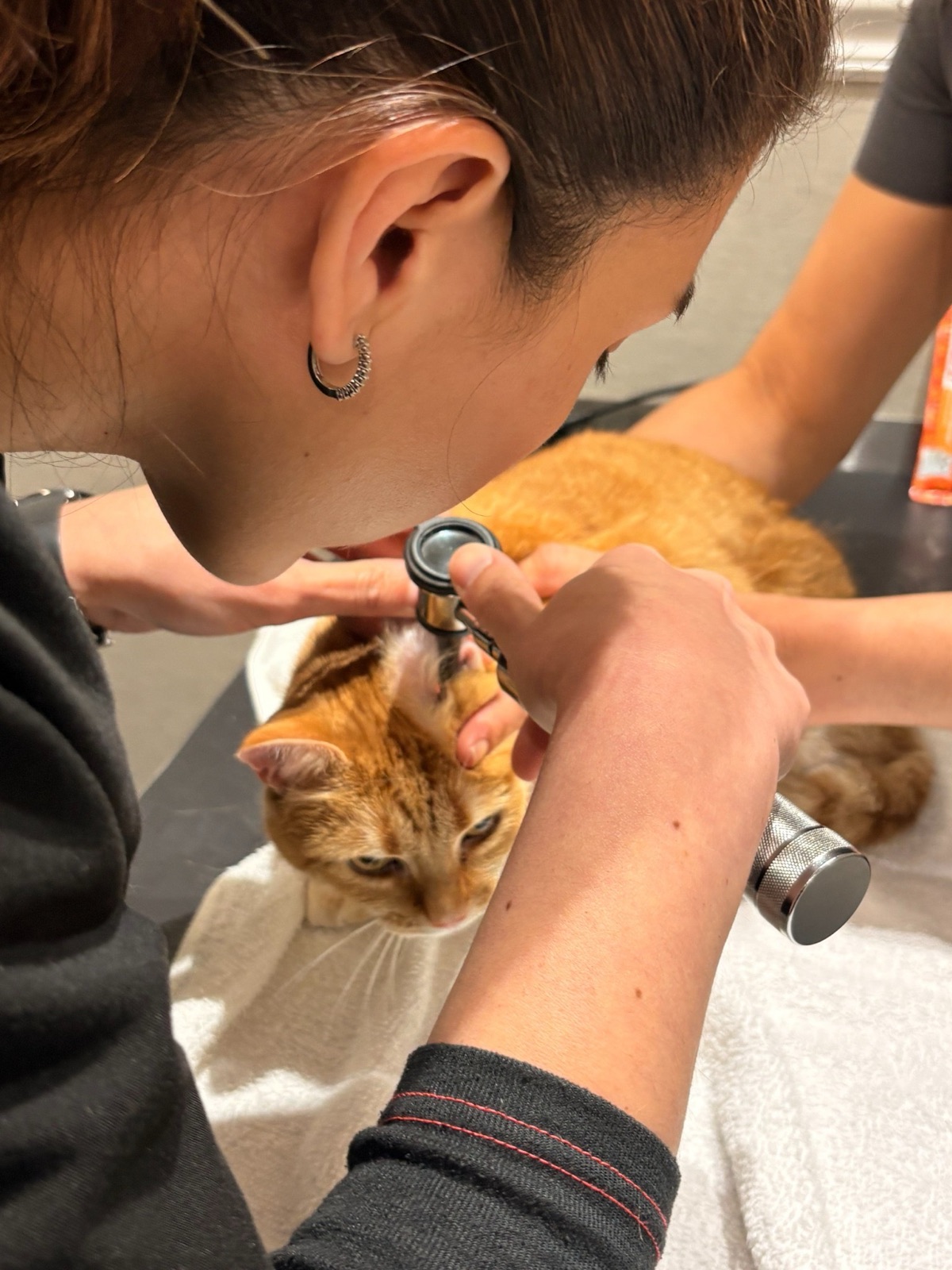
Before the call, take a few clear photos or a short video of the problem. Find a bright, quiet room. Keep your cat's food, any medicine and a few treats nearby. Write down when the problem started and what has changed since.
Treatment for fleas and ticks in cats
Your vet will choose a product that suits your cat's age, weight and health. Many work for a month, and some last longer. Every pet in the home needs treatment at the same time. You will also need to clean your home well for a few weeks. Never use a dog flea product on a cat. Many contain permethrin, which is toxic to cats. If your cat has a tick, your vet can show you how to remove it safely.
For more background, see the Companion Animal Parasite Council, a trusted source written for pet owners.
Caring for your cat at home
Alongside your vet's plan, these steps help:
- Treat every pet in the house, not just the itchy one.
- Vacuum often and wash bedding in hot water.
- Give prevention all year round.
- Never use dog flea products on cats — many contain permethrin, which is toxic to cats.
Use prevention all year, not just in summer. Check your cat for ticks after walks in grass or woods. Wash bedding often in hot water.
Questions your vet may ask
Having answers ready makes the visit faster and more useful. Your vet will likely ask:
- Have you seen fleas, flea dirt or a tick?
- Which flea and tick product do you use, and when was the last dose?
- How many pets live in your home?
- Does your cat go outside, and where?
- Is the itching getting worse?
After your visit, you'll find the care plan in your dashboard. If things don't improve as expected, book a follow-up with the same vet. They will already know your cat's history.
When to go in person
Go to an emergency clinic now if you notice:
- Drooling, twitching or seizures after a flea treatment
- Pale gums or weakness in a young or small pet with lots of fleas
- Wobbliness or weakness after a tick bite
Video visits aren't for emergencies. Don't wait for an appointment.
Still not sure what's going on?
A vet can look at your cat today and tell you what to do next.
Also see: Flea & tick in dogs