
Understanding dog skin problems
Skin problems in dogs are very common. The skin is the body's largest organ, and it reacts to many things. Fleas, allergies, infections and stress can all show up on the skin first. Some problems look alarming but are simple to fix. Others are a sign of something deeper, like a hormone problem. Because the causes overlap, the same red patch can need very different care. That is why it helps to have a vet look before you try a treatment from the shop.
Signs to watch for
Every dog is different. These are the signs vets see most often:
- Hot spots — red, moist, painful patches.
- Hair loss or a dull, patchy coat.
- Scabs, bumps or crusting.
- Dandruff or greasy skin.
- A new lump or one that has changed.
One sign on its own may not mean much. A few together, or signs that keep coming back, are worth a vet visit.
Common causes
Finding the cause is what makes treatment work. Common ones include:
- Allergies and flea bites.
- Bacterial or yeast skin infections.
- Mites and other parasites.
- Licking or chewing from boredom or anxiety.
- Hormonal conditions in older pets.
How an online vet can help
A video visit with an online vet is often the fastest way to get answers. In one call, a licensed vet can:
- Examine the affected area in good light, close to the camera.
- Compare photos you upload over time.
- Recommend cleaning, cones or medicated products.
- Prescribe treatment for likely infections when appropriate.
- Flag lumps that should be checked or sampled in person.
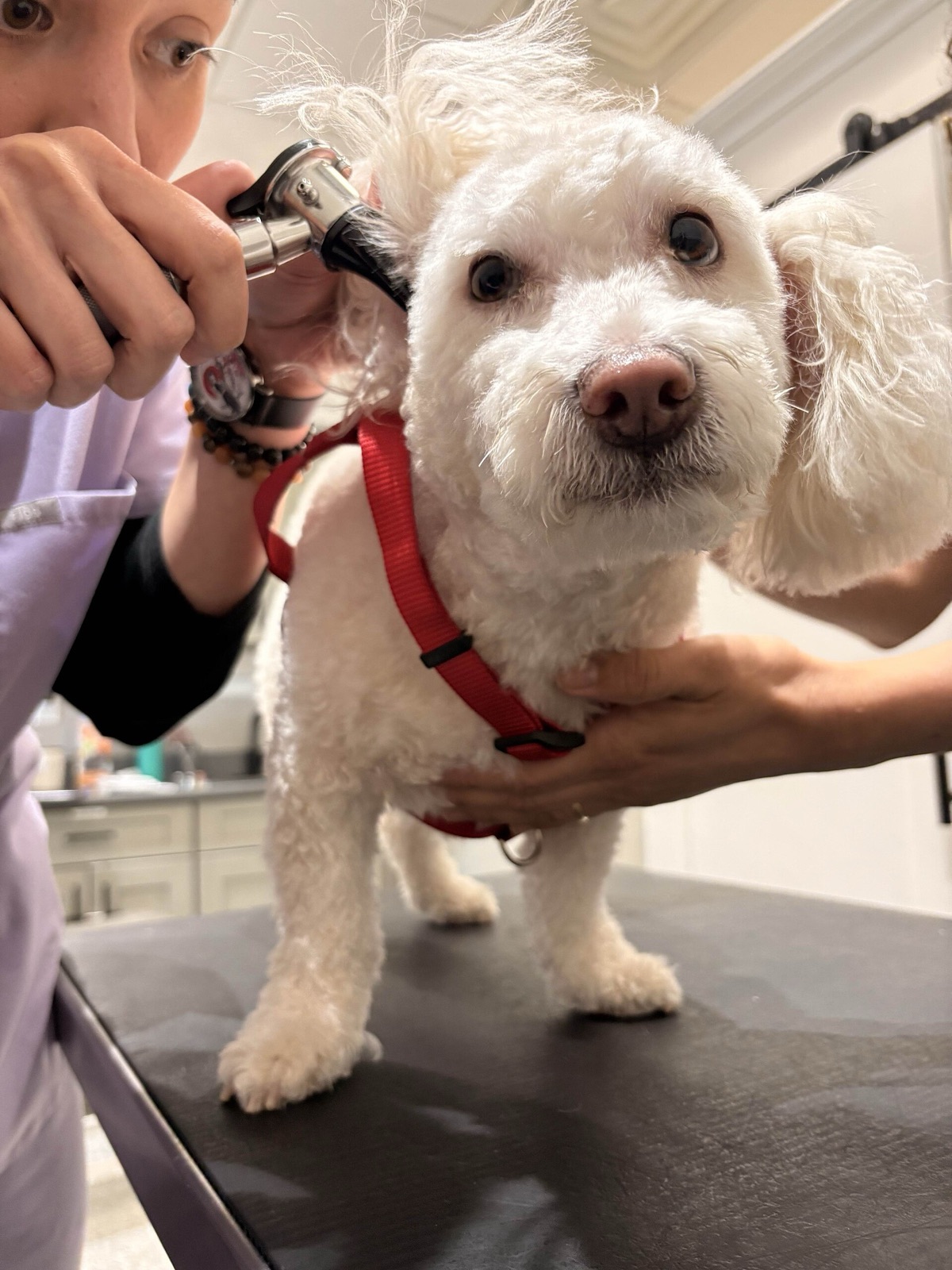
Before the call, take a few clear photos or a short video of the problem. Find a bright, quiet room. Keep your dog's food, any medicine and a few treats nearby. Write down when the problem started and what has changed since.
Treatment for skin problems in dogs
Treatment starts with finding the cause. Infections may need a medicated wash, a cream or tablets. Parasites need the right product for your dog's size and age. Allergy-related skin problems often need both itch relief and a plan to avoid the trigger. Your vet may ask you to send photos as the skin heals. If a spot doesn't improve, they may suggest a skin scrape or a sample taken in person.
For more background, see the Merck Veterinary Manual — Pet Owner Version, a trusted source written for pet owners.
Caring for your dog at home
Alongside your vet's plan, these steps help:
- Take a clear photo of the area each day so you can see if it's changing.
- Stop your pet licking or scratching the spot.
- Don't apply human creams — some are toxic if licked.
- Keep the area clean and dry.
Brush your dog often, so you notice changes early. Keep up parasite prevention. Feed a complete diet, since poor nutrition can show in the coat.
Questions your vet may ask
Having answers ready makes the visit faster and more useful. Your vet will likely ask:
- When did you first notice the problem, and has it spread?
- Is the area itchy, painful or neither?
- Has your dog been licking or chewing the spot?
- Have you tried any creams, sprays or shampoos?
- Is your dog eating, drinking and acting normally?
After your visit, you'll find the care plan in your dashboard. If things don't improve as expected, book a follow-up with the same vet. They will already know your dog's history.
When to go in person
Go to an emergency clinic now if you notice:
- A wound that's deep, bleeding or smells bad
- A lump that's growing fast or bleeding
- Skin problems along with fever, lethargy or not eating
Video visits aren't for emergencies. Don't wait for an appointment.
Still not sure what's going on?
A vet can look at your dog today and tell you what to do next.
Also see: Skin in cats